
Every winter in Massachusetts, a cold snap sends the same emergency calls flooding in: frozen pipes, and the burst pipes that follow when they thaw. A single burst pipe can release hundreds of gallons of water into your home in an hour, and the cleanup can cost far more than the plumbing repair itself.
The good news is that frozen pipes are largely preventable. As a Burlington-based plumbing company that handles these emergencies across Middlesex County every winter, we put together this guide on how to keep your pipes from freezing, and exactly what to do if one bursts anyway.
Why Pipes Freeze and Burst in New England
When water freezes, it expands. Inside a closed pipe, that expansion creates enormous pressure, and the pipe eventually fails at its weakest point. Here is the part that surprises people: the pipe usually does not leak while it is frozen. The burst becomes obvious when the ice thaws and water rushes through the crack.
In our older New England housing stock, the pipes most at risk are the ones exposed to the cold: those in unheated basements, crawl spaces, attics, garages, and along exterior walls. Homes in Burlington and surrounding towns like Woburn, Winchester, and Lexington see this every year, especially during deep freezes.
How to Prevent Frozen Pipes
Most of these steps are simple and cost little or nothing:
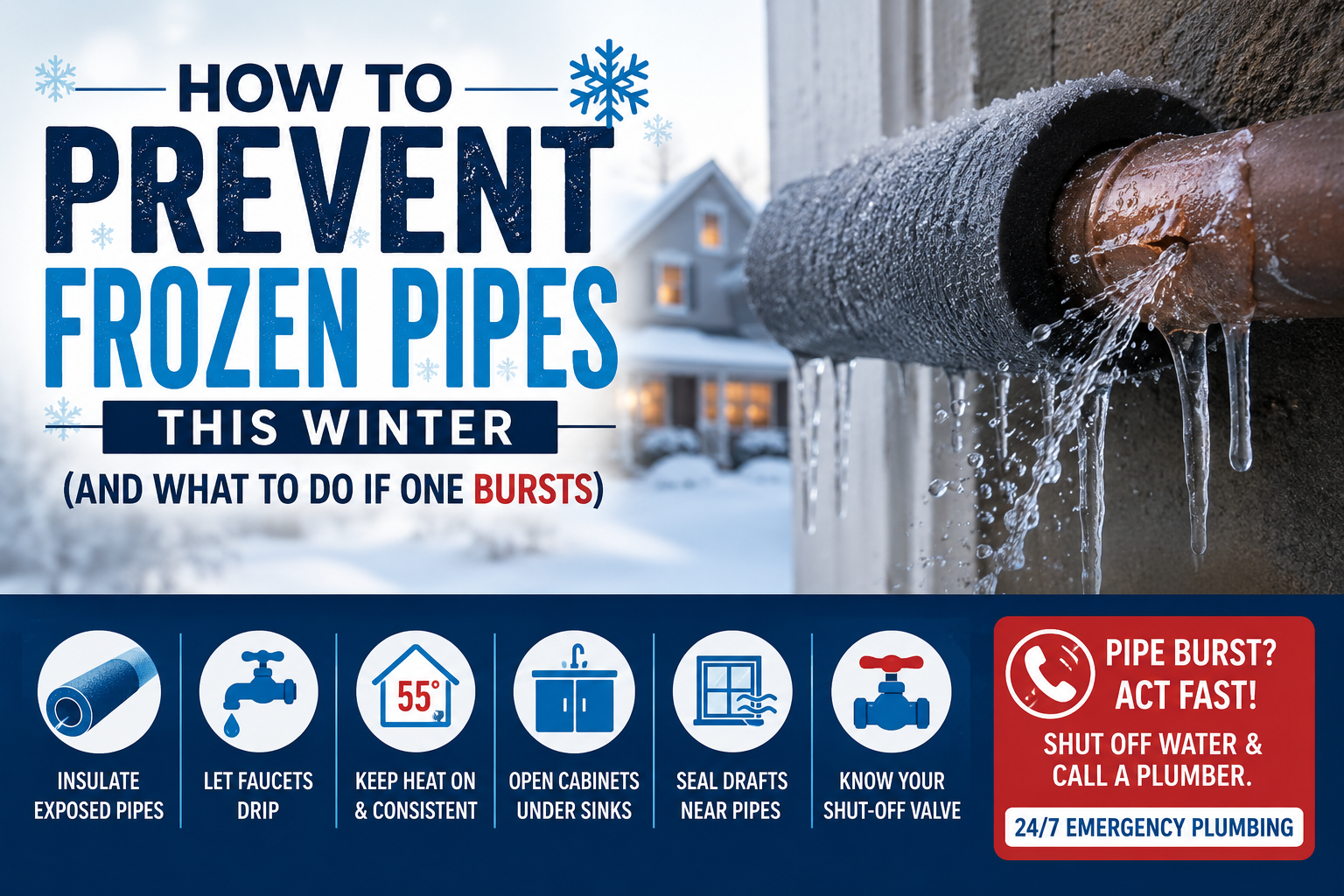
- Insulate exposed pipes. Foam pipe sleeves on pipes in the basement, crawl space, attic, and garage are cheap and effective. Pay special attention to pipes along exterior walls.
- Let faucets drip during deep freezes. A slow trickle from faucets served by vulnerable pipes relieves pressure and keeps water moving, which makes freezing far less likely.
- Keep your heat on and consistent. Never let the house drop below about 55 degrees, even when you are away. If you travel in winter, do not shut the heat off entirely.
- Open cabinet doors under sinks. This lets warm household air reach the pipes behind them, especially on exterior walls in kitchens and bathrooms.
- Seal drafts near pipes. Cold air pouring in through gaps in the foundation, rim joists, or around cables can freeze a nearby pipe fast. Seal them with caulk or foam.
- Disconnect garden hoses and shut off outdoor spigots. Water left in an outdoor line or hose bib is one of the most common freeze points. Drain them before the first hard freeze.
- Know where your main shut-off valve is. Before an emergency, not during one. Make sure everyone in the house knows how to turn the water off fast.
Warning Signs a Pipe May Be Frozen
Catching a freeze early can prevent a burst. Watch for:
- No water, or only a trickle, coming from a faucet in cold weather
- Frost visible on an exposed pipe
- Strange smells from a faucet or drain, which can signal a blockage
- A section of pipe that is bulging or looks different
If you suspect a pipe is frozen but has not burst, you can try to thaw it gently by keeping the faucet open and applying warm air with a hair dryer, working from the faucet end back toward the frozen section. Never use an open flame. If you cannot reach the frozen section or the pipe has already burst, call a plumber right away.
What to Do If a Pipe Bursts
If you are dealing with an active burst right now, act fast:
- Shut off the main water valve immediately. This stops the flow and limits the damage.
- Open the lowest faucet in the house to drain the remaining pressure from the lines.
- Turn off electricity to any area where water is near outlets or your electrical panel.
- Move valuables and soak up standing water to limit damage to floors and belongings.
- Call an emergency plumber. The faster the leak is stopped and repaired, the less damage and the lower the cost.
At Perricone Home Services, we offer 24/7 burst pipe repair and emergency plumbing across Burlington and Middlesex County. If a pipe has burst, call us any time at (978) 430-5553 and we will help you stop the water and get out to you fast.
Should You Repair or Replace Pipes That Keep Freezing?
If the same pipe freezes winter after winter, insulation and dripping faucets are treating the symptom. Sometimes the better long-term fix is rerouting or upgrading the vulnerable pipe. And if you have older galvanized plumbing that is corroding and repeatedly failing, it may be time to consider pipe replacement or whole-home repiping. We are always happy to take a look and give you an honest assessment.
Frequently Asked Questions
At what temperature do pipes freeze?
Pipes are generally at risk once the outside temperature drops to around 20 degrees Fahrenheit or below, especially if they are exposed or in unheated spaces. Wind chill and drafts can cause freezing even when the thermometer reads a bit higher.
Should I leave my faucets dripping all winter?
Not all winter, but dripping vulnerable faucets during a hard freeze or cold snap is a smart, low-cost way to prevent freezing. Focus on faucets served by pipes along exterior walls or in unheated areas.
My pipe is frozen but has not burst. What should I do?
Keep the faucet open and gently warm the frozen section with a hair dryer, working from the faucet back toward the freeze. Never use an open flame. If you cannot reach it or are unsure, call a plumber before it bursts.
How fast can a burst pipe damage my home?
Very fast. A burst pipe can release hundreds of gallons per hour, damaging floors, walls, and ceilings within minutes and creating conditions for mold. That is why shutting off the water and calling for help quickly matters so much.
Does homeowners insurance cover burst pipes?
Many policies cover sudden, accidental water damage from a burst pipe, though coverage varies and frozen-pipe claims sometimes depend on whether the home was heated. Check your specific policy, and keep documentation of the repair for any claim.
Stay Ahead of Winter
A little preparation in the fall saves a lot of stress and expense in January. Insulate your pipes, seal the drafts, and know where your shut-off valve is. And if a pipe does freeze or burst, Perricone Home Services is here 24/7.
Call (978) 430-5553 any time for emergency help, or to schedule a plumbing check before winter sets in.